Wallet
This section provides guidance on managing your cycles with your wallet (your account), which are essential for maintaining and providing enough resources for your modules in the Juno ecosystem.
Just like your modules, your wallet is under your control — Juno cannot access, move, or recover the cycles held inside.
Because of this model, there are no refunds, reversals, or recovery options. Always double-check destination addresses before sending funds.
As a best practice, we recommend not holding large amounts of cycles unless necessary. Use it as a utility for fueling your modules — not as a long-term vault.
We also recommend enabling monitoring to ensure your projects and analytics stay alive and responsive at all times.
What are Cycles?
Cycles are used to pay for infrastructure usage. Your Satellite, Mission Control or Orbiter consume cycles while they are active.
The amount of cycles available determines whether a module will be active, inactive, or eventually decommissioned (deleted).
This ensures that related costs cannot surpass the amount of cycles available.
Think of cycles like prepaid mobile data:
- Just like your mobile plan allows you to make calls and browse the internet, cycles enable your containers to process computations and store data.
- When your data (cycles) runs out, your service becomes inactive.
- To keep your modules running smoothly, you need to top up your cycles regularly (manually or automatically).
- If you don’t top it up, after some time, it will be decommissioned, similar to losing your prepaid number due to prolonged inactivity.
Buying Cycles
The easiest way to purchase cycles — and get the best deal — is through Cycle.express, which lets you pay with a credit card via Stripe.
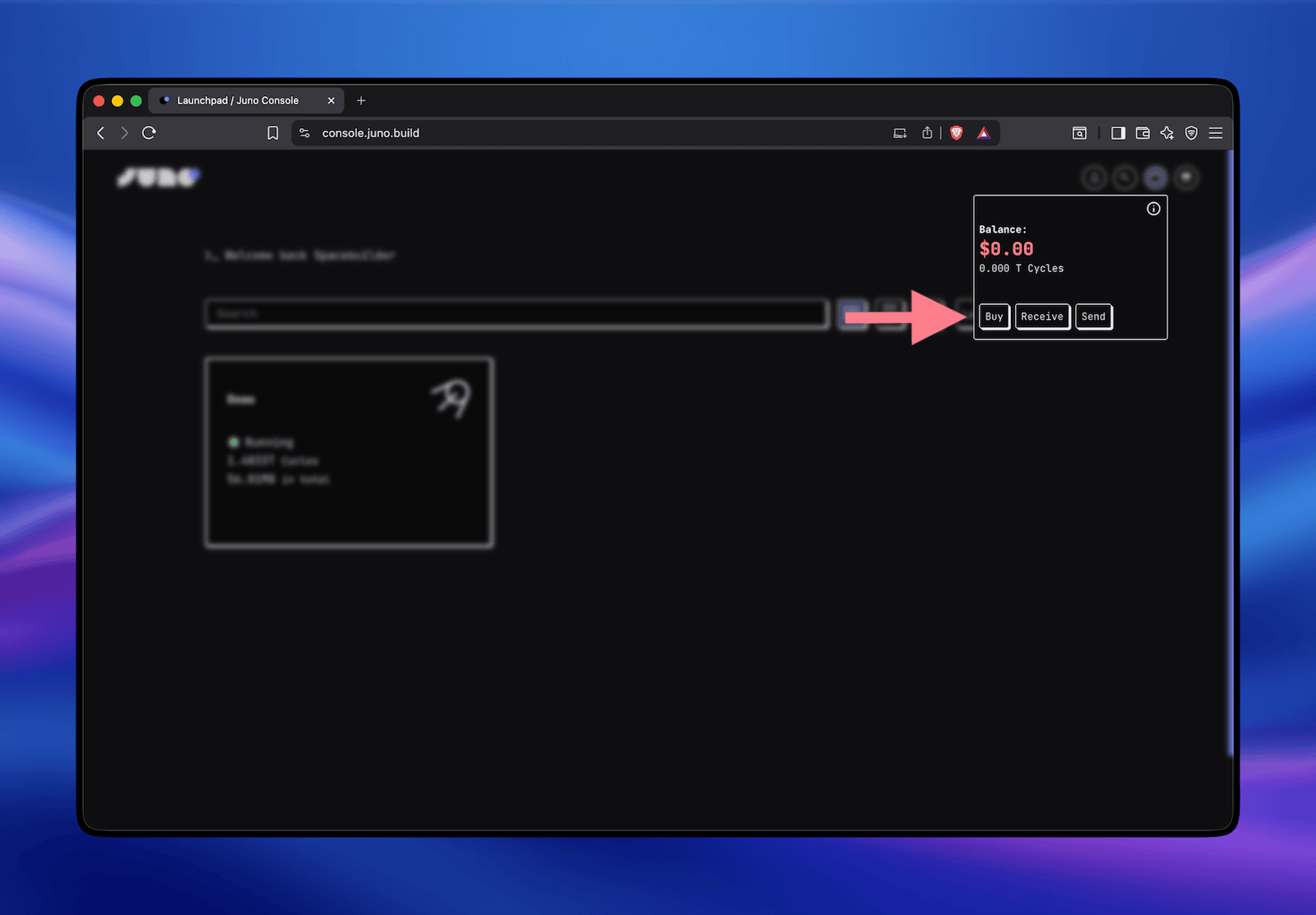
The service is integrated directly into the Juno Console. From your wallet, click "Buy" and follow the steps.
The default purchase amount is $1 USD. You can change this amount on Stripe's payment page (maximum $100).
Receiving Cycles
If you already hold cycles or want to swap some, you can use the OISY Wallet.
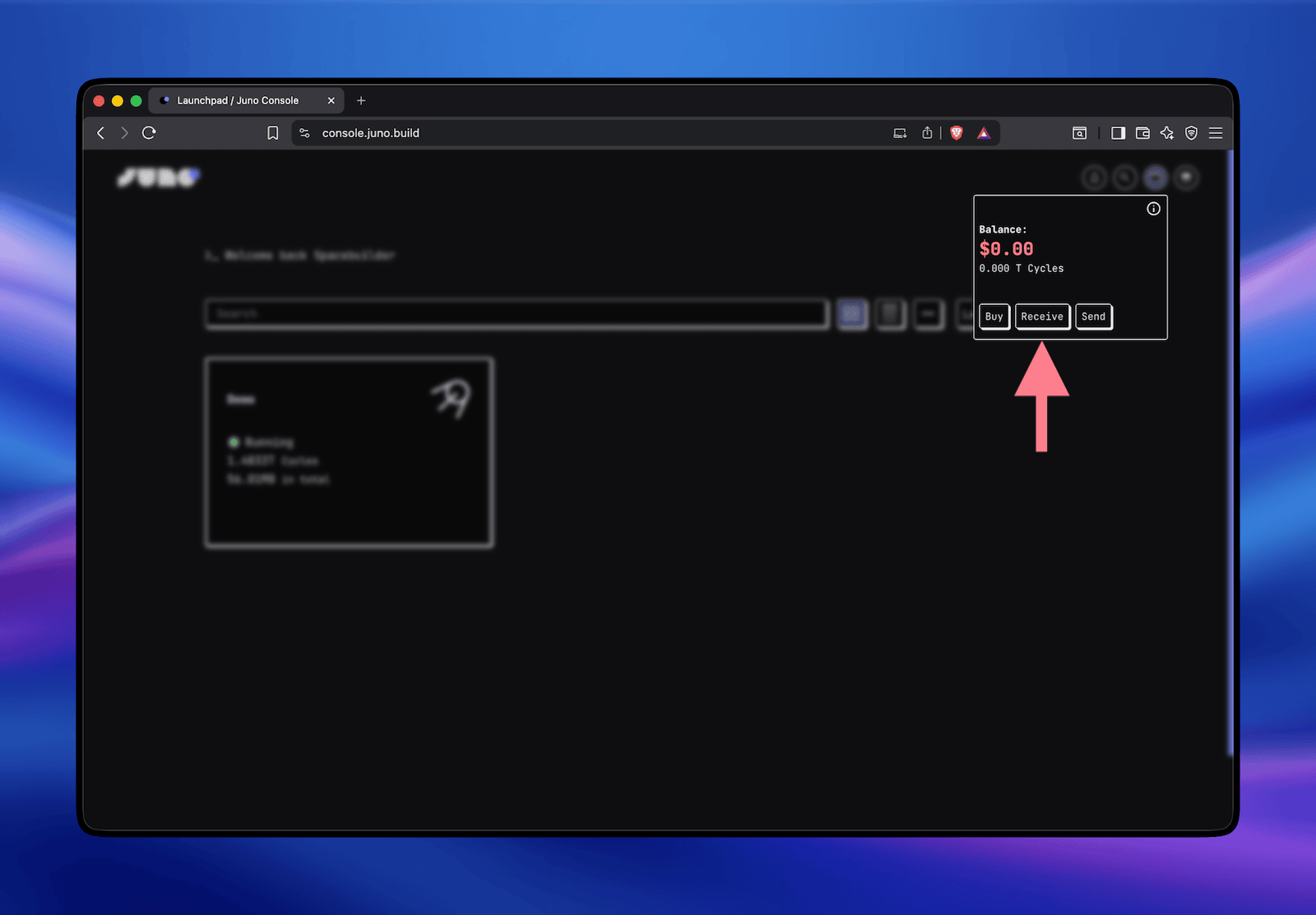
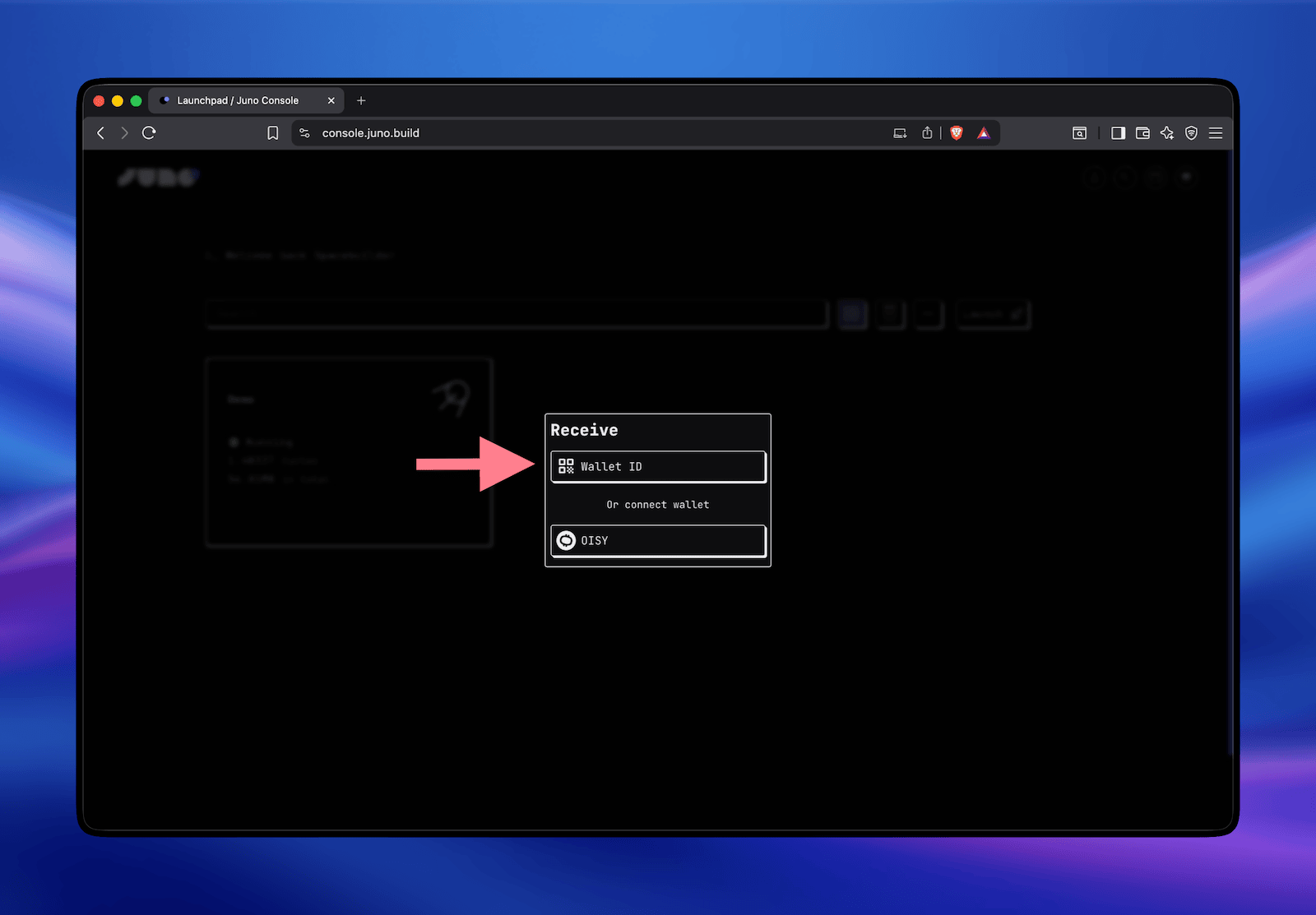
To initiate a transaction manually, you will need to provide a destination address. To find it in the console, open the shortcut to your wallet and click "Receive" select "Wallet ID".
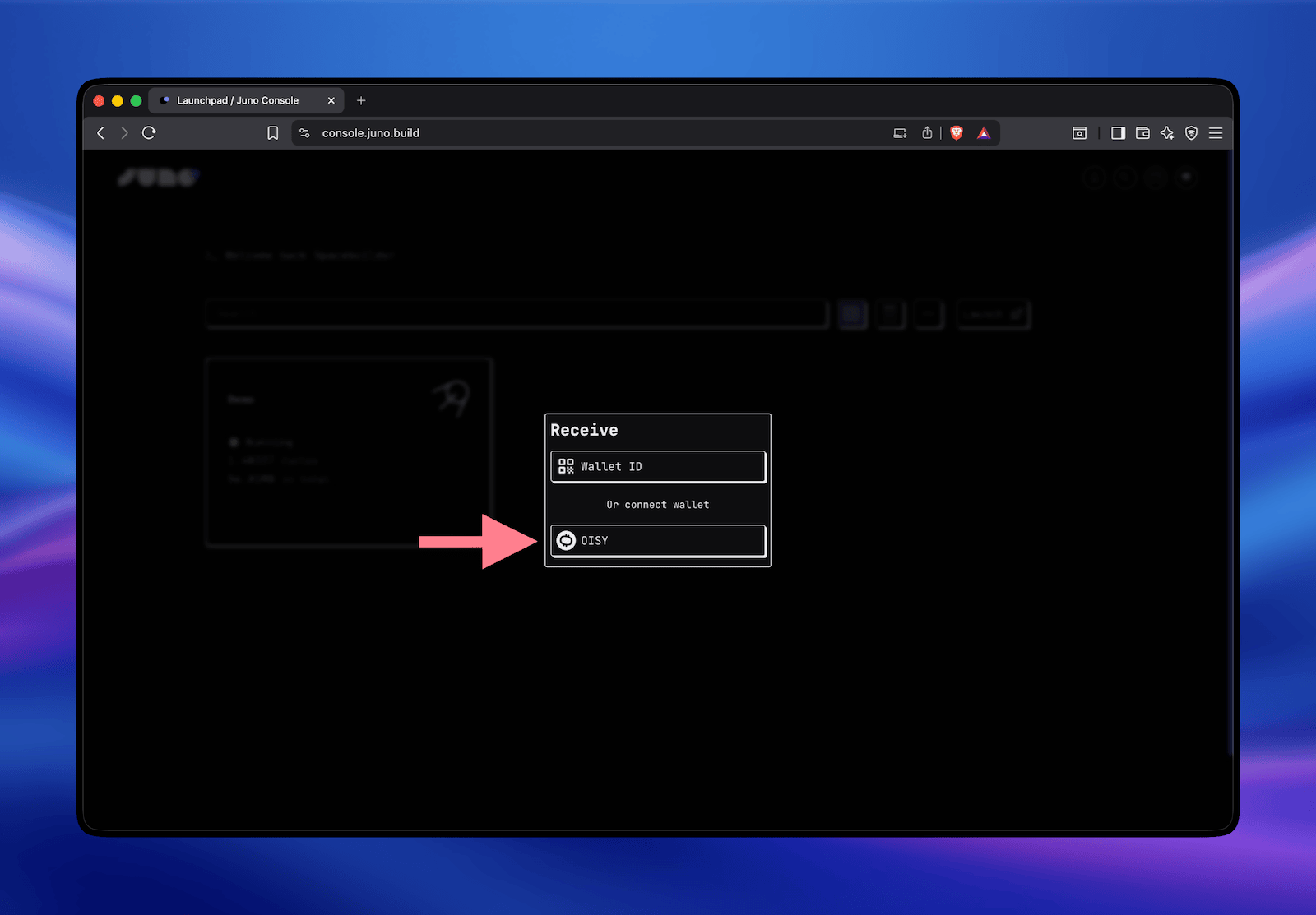
You can also connect OISY to Juno's console to initiate the transaction and proceed with the approval. This eliminates the need to copy, paste, or scan any addresses.
Send Cycles
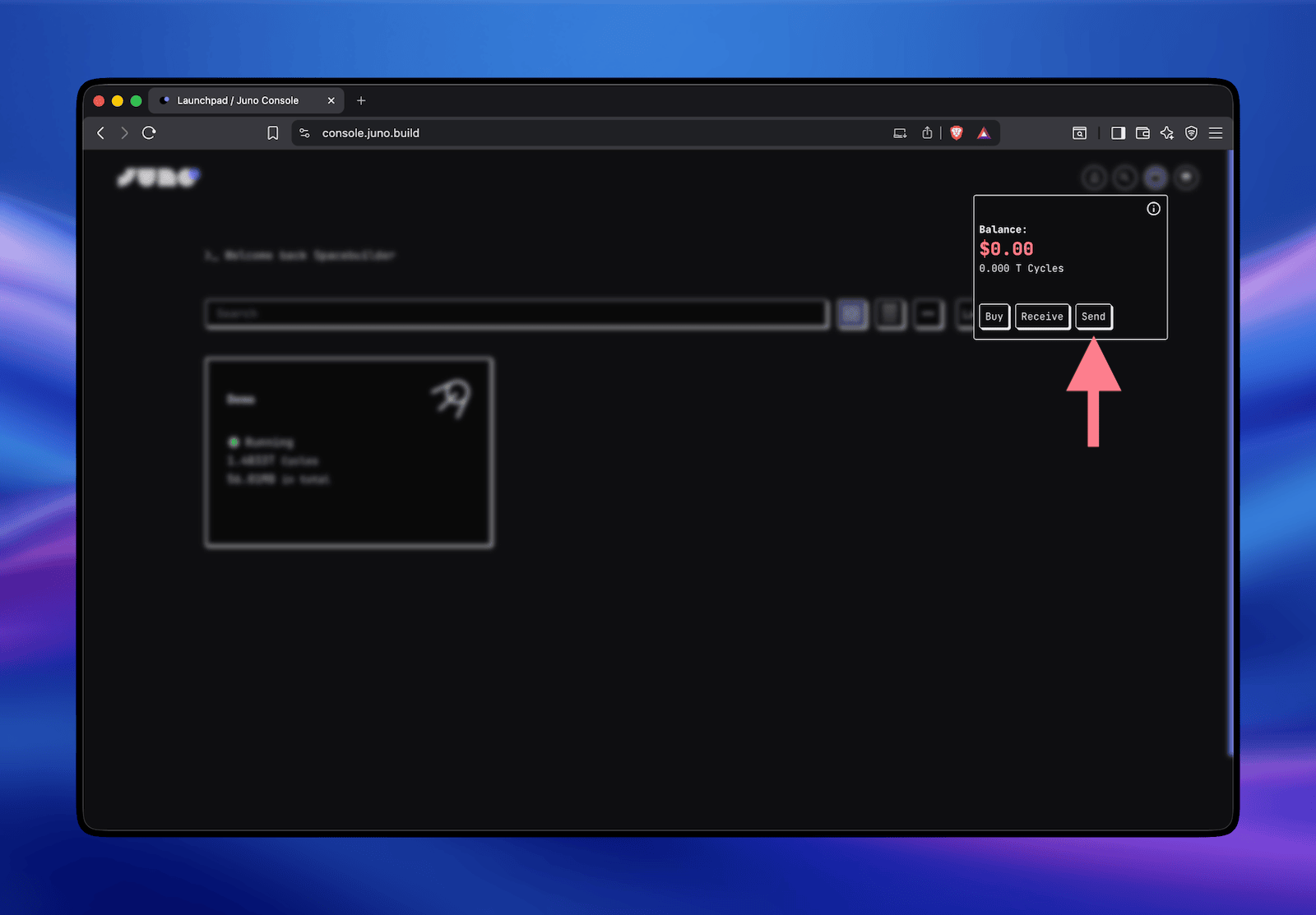
Sending Cycles to the ecosystem or the outside world can be initiated from your wallet in Juno's console. To start a transaction, click "Send".
Sending cycles transfers them to another wallet. To add manually cycles (resources) to your modules (Satellites, Orbiters, or Mission Control), use the Top-up feature instead.
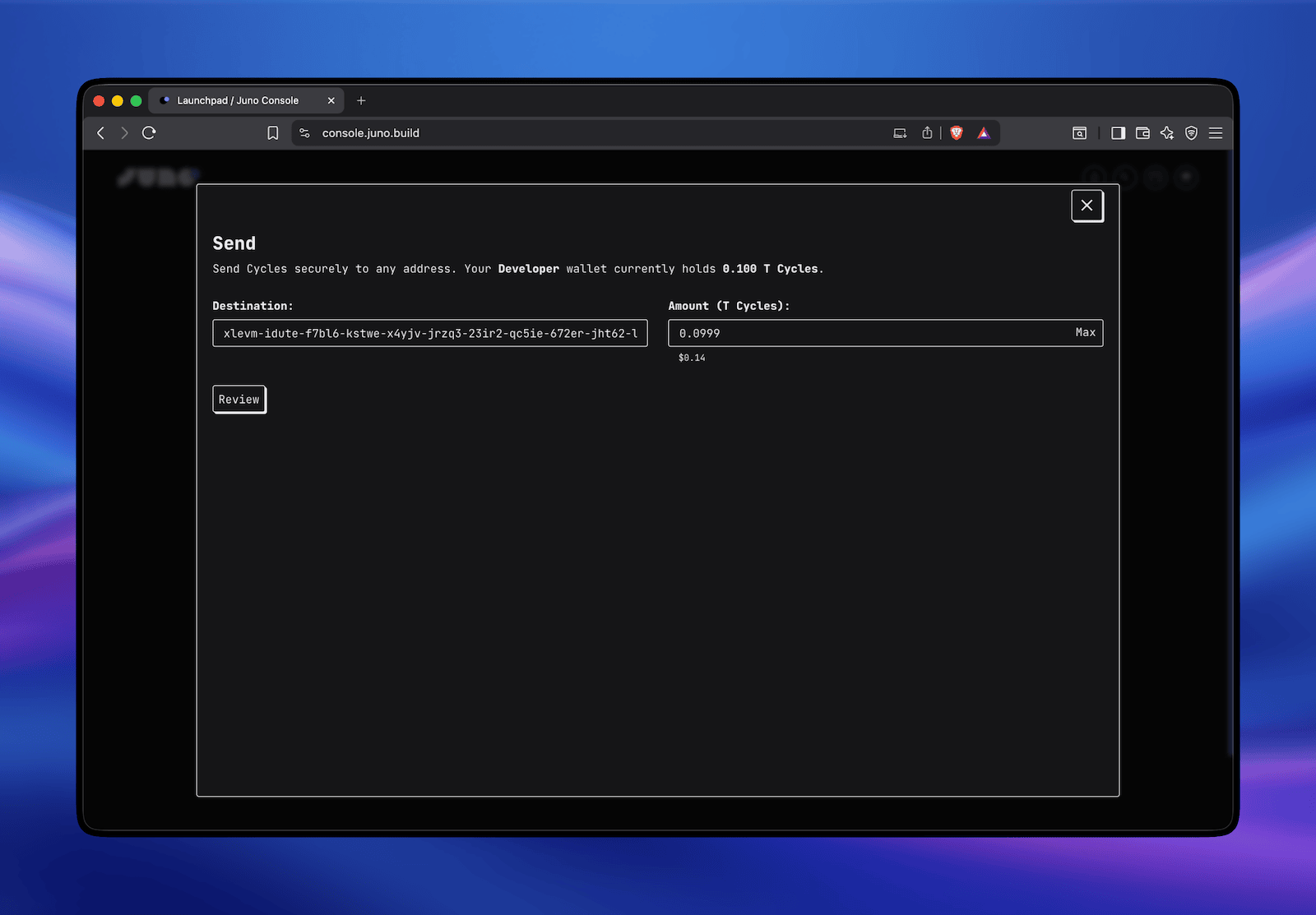
Enter the destination wallet ID or account identifier where you want to send cycles, along with the amount.
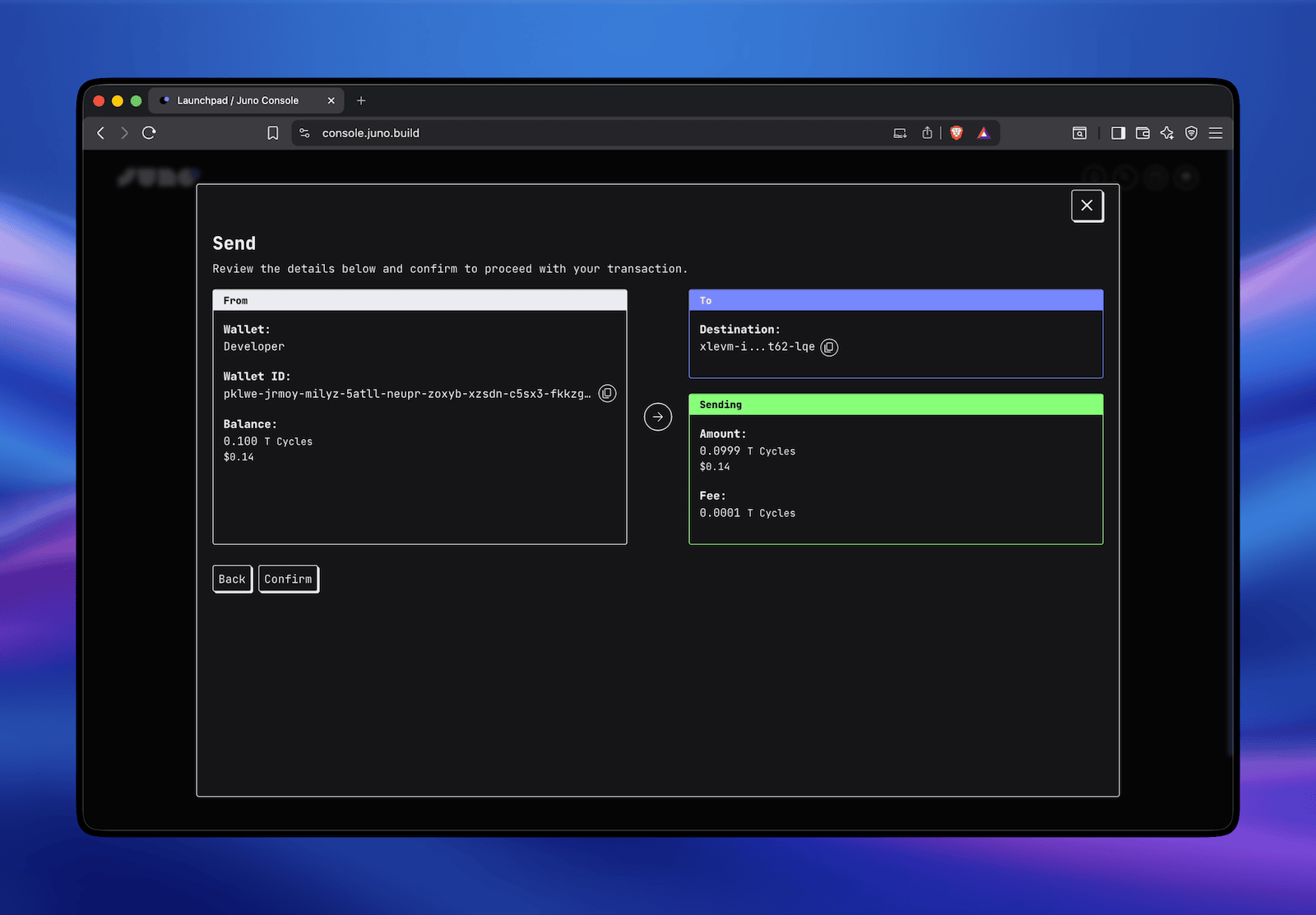
Review the transaction details and confirm to execute it.
ICP
For convenience, the developer wallet can hold ICP tokens as well. When its balance is greater than zero, a conversion feature lets you easily convert them to cycles.
You can also receive and send ICP for backwards compatibility with Mission Control.
Cycles remain the recommended approach for all operations.